
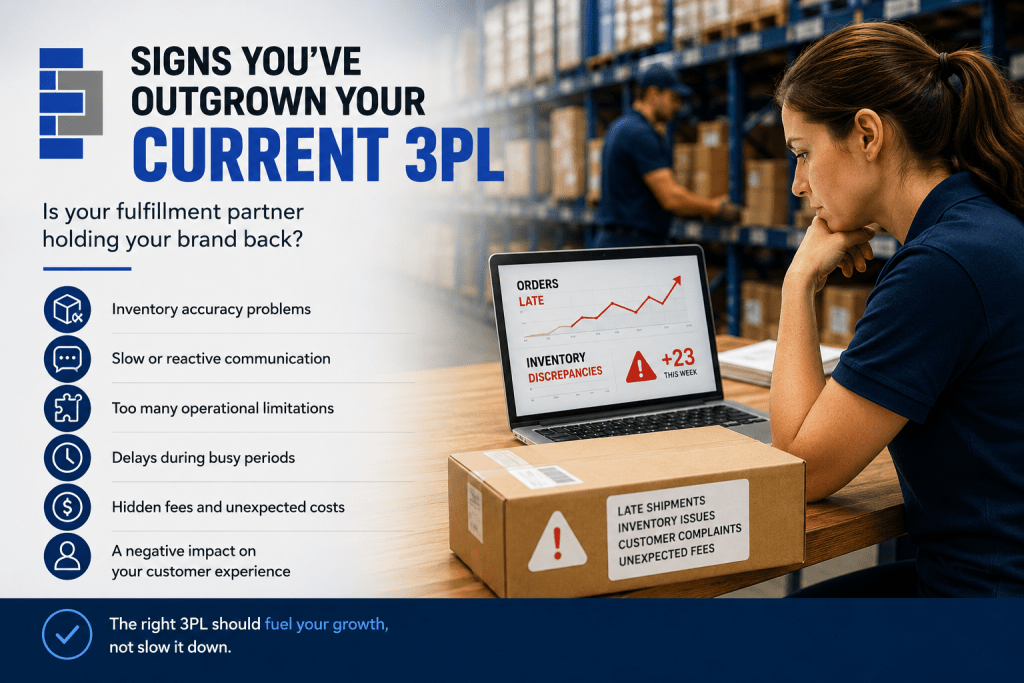
1. Inventory Accuracy Problems Are Becoming Common
A missing order here and there may seem manageable at first. But when inventory discrepancies become frequent, the impact compounds quickly:
- Overselling products
- Delayed shipments
- Customer service complaints
- Refunds and replacements
- Lost customer trust
As order volume grows, inventory accuracy becomes one of the most important operational metrics in your business. If your current provider struggles to maintain accurate counts, it may be a sign their systems or warehouse processes are not built to scale.
A strong 3PL should provide:
- Real-time inventory visibility
- Reliable cycle counting procedures
- Consistent inventory reconciliation
- Clear communication when issues arise
2. Communication Has Become Slow or Reactive
One of the most common frustrations brands have with larger or overloaded 3PLs is poor communication.
If you find yourself:
- Waiting days for responses
- Chasing updates on shipments
- Getting vague answers to operational questions
- Struggling to reach someone who understands your account
…it may be a sign your fulfillment partner is stretched too thin.
As your business grows, you need proactive operational support — not just warehouse space. Your 3PL should function like an extension of your team, helping you solve problems before they impact customers.
3. Your Fulfillment Needs Have Become More Complex
Many fulfillment providers are designed for simple pick-and-pack operations. But growing brands often require more operational flexibility, including:
- Subscription box assembly
- Kitting and bundling
- Retail compliance
- Custom packaging
- Amazon prep
- Multi-channel fulfillment
If your current warehouse struggles every time you launch a new promotion, bundle products, or expand sales channels, you may have outgrown their capabilities.
Operational flexibility becomes increasingly important as brands scale.
4. Shipping Delays Increase During Busy Periods
Peak season exposes weak fulfillment operations quickly.
If your 3PL consistently experiences:
- Backlogs during promotions
- Late order processing
- Missed SLAs
- Shipping bottlenecks during Q4
…it may indicate they lack the staffing, processes, or infrastructure needed to support growth.
A scalable fulfillment operation should maintain consistency even during high-volume periods.
5. Hidden Fees Are Eating Into Margins
As brands grow, fulfillment billing can become difficult to predict.
Some common warning signs include:
- Unexpected storage charges
- Excessive receiving fees
- Surprise project billing
- Unclear accessorial charges
A reliable 3PL should offer transparent pricing and help brands understand operational costs before problems arise.
The cheapest provider on paper often becomes the most expensive operationally.
6. Your Customer Experience Is Starting to Suffer
Fulfillment directly impacts customer retention.
Late deliveries, damaged orders, incorrect shipments, and poor packaging all reflect on your brand — not the warehouse.
If operational mistakes are generating negative reviews or increasing support tickets, your fulfillment provider may now be limiting your growth instead of enabling it.
What to Look for in Your Next 3PL
As your business scales, your fulfillment partner should provide:
- High inventory accuracy
- Fast, proactive communication
- Flexible operational capabilities
- Scalable infrastructure
- Transparent pricing
- Reliable performance during peak periods
The right 3PL should help your business grow confidently — not create operational stress behind the scenes.
Final Thoughts
Outgrowing a 3PL is normal for fast-growing ecommerce brands. The key is recognizing the signs early before fulfillment issues begin affecting customer experience, profitability, and long-term growth.
A fulfillment partner should do more than move boxes. They should help create operational stability that allows your brand to scale efficiently.
If your current 3PL is creating more problems than solutions, it may be time to evaluate a provider built for growth.